
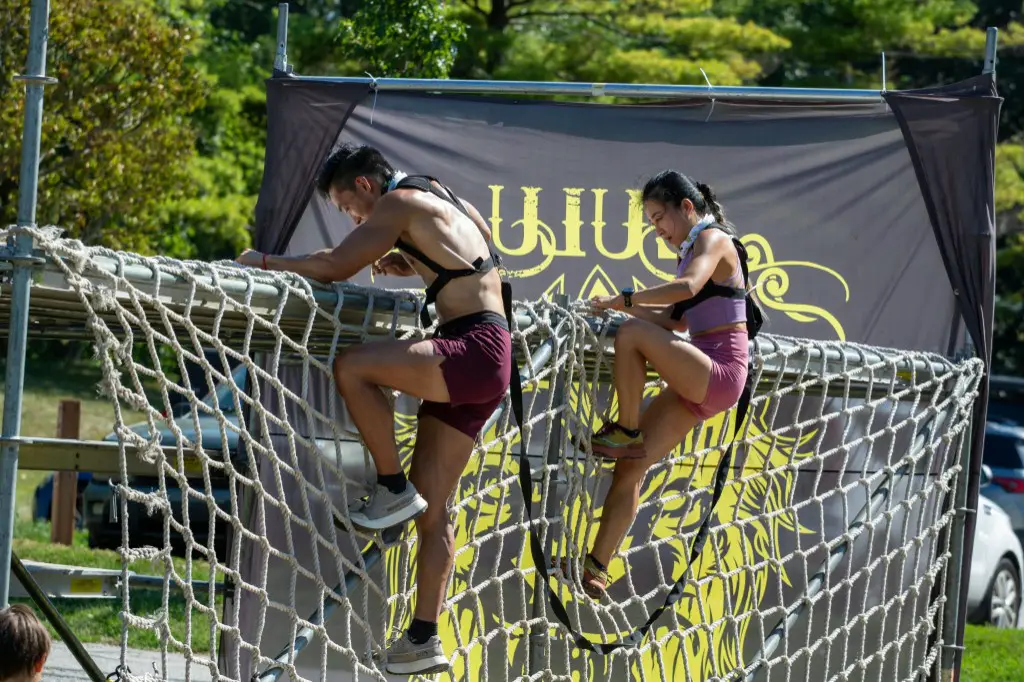
Choosing what to wear for an obstacle course day matters more than buying specialty logos. You want kit that moves with you, grips when the ground is uneven, and stays manageable if you get damp. This guide expands the short gear notes in our first-timer prep guide. It is practical clothing advice—not medical advice.
General OCR clothing guidance from independent resources such as OCR Guide’s gear overview and the OCR Germany clothing guide (reviewed 19 November 2026) aligns with a simple rule: prioritize grip, quick-drying fabric and a dry change for after.
Start with shoes that already know your feet
Trail-style shoes with a secure fit and grippy tread beat brand-new road flats. Wear them on at least a few outdoor walks before event day so hot spots show up at home, not at the start line. Soft ground and wet grass punish smooth outsoles.
If an event may include water or mud sections, drainage matters. Waterproof membrane shoes can trap water once it goes over the collar—OCR Guide’s winter gear notes make the same point for courses with water features. Zulu Challenge only includes muddy or water sections when the park, terrain and weather allow (see What to Expect), so pack for grip first and adjust to the forecast for your city day.
Tops and bottoms that move and dry
- Prefer technical or athletic fabrics that dry faster than heavy cotton once damp.
- Keep clothing close-fitting enough that it will not snag on nets or catch under knees during crawls, without restricting reaches or climbs.
- Shorts or tights both work; choose what you have already trained in. New compression pieces belong in practice first.
- Skip jewellery and loose extras that can catch or get lost on course.
Layers for Canadian outdoor days
For a fuller layer plan across cool mornings and mixed afternoons, see dressing for Canadian outdoor challenge weather.
Temperature alone is not the whole story—wind, waiting time and your pace all change how warm you feel. A light technical base you can move in, plus a packable layer for the start area, usually beats one thick jacket you cannot take off mid-course. Hats or headbands should stay put through crawls; if they slip in training, leave them home.
After you finish, body heat drops quickly in damp clothes. Dry layers in the car or bag are part of the clothing plan, not an afterthought. Pair this article with the race-day packing list.
Gloves: helpful, not mandatory
Thin, grippy gloves can protect palms on ropes and walls. Thick, untested gloves can reduce feel on precise grips. If you use gloves, wear them in training first. OCR Guide’s gloves page frames the same trade-off: protection versus touch sensitivity.
What Zulu Challenge participants should also check
Adults complete a tethered ~5 km challenge in teams of two or more (solo athletes are paired on site). Kids run age-banded distances; K9 requires a harness and hands-free leash, with a muzzle required for aggressive or protective dogs. Confirm category rules on the Adults, Kids, K9 and FAQ pages before you buy kit you do not need.
Early-bird ticket prices published on those pages: Adults $65, Kids $40, K9 $65.
Simple pre-event clothing test
- Wear your full start-line outfit on a walk with hills or uneven ground.
- Add a few safe ground movements (step-ups, easy crawls on soft ground).
- Note rubbing, slipping shoes or trapped water feel—fix those issues before the event.
When your kit feels boringly reliable, pick a city day with Find your event or the 2027 schedule, then register through the city’s Eventbrite page when registration is open. Cities listed as Pending use notification messaging—not open-registration claims.